

U value is a measure of how much heat is transferred through the window. The lower the U value, the better the insulation properties of the window. Also known as thermal resistance, the U value is important for energy efficiency, reducing heating costs, and improving comfort. Another window performance indicator is the solar heat gain coefficient (SHGC) which indicates the amount of solar radiation passing through the window which impacts the need for heating and cooling. This article is a guide to understanding U value, and SHCG, what it is, factors affecting U value, and how to calculate the U value of a window.
What is the U Value of Windows?
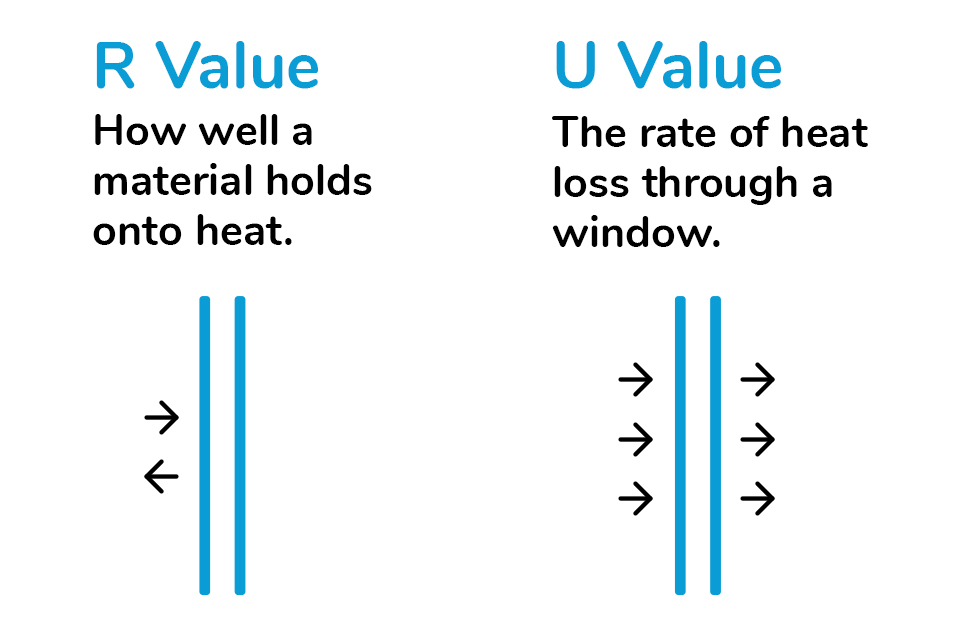
U value is the amount of thermal transference or the rate of heat loss through a window and is measured in units of Watts per metre squared Kelvin (W/m2.K). This is the rate of heat transfer between a surface and surrounding air. A window with low U value is better at keeping the heat or cold out, signifying better insulation and energy efficiency. Insulation is needed regardless of the climate so the U value is imperative to gauge energy efficiency in any location. In a warm climate, insulation is needed to keep the cold in and the heat out. In a cool climate, it keeps the cold out and the warmth in. The term U value began when Australia’s Window Energy Rating Scheme (WERS) was established in 1995. This scheme uses the U value to assess a window’s energy efficiency and is a concept used internationally to measure heat transfer through a material like a window pane and frame. The U value refers to the entire structure of the window including the glass, frame, seals and spacers.
R value, on the other hand, is the measurement of how well a material holds onto heat. Unlike U value which indicates heat loss, R value measures a material’s ability to resist heat flow. It is the inverse of the U value.
Factors Affecting U Value of Windows
The U value of a window is affected by a variety of factors. Each of these impacts the level of thermal transmittance:
- Frame materials: The materials used for the frame has an impact on the U value rating. uPVC windows are energy efficient, meaning that the material the frame is made of won’t transfer heat and cold. Aluminium windows, on the other hand, are a highly conductive material and transfer heat more quickly, which leads to a higher U value rating. Timber frames are known for their low thermal conductivity and therefore lower U values.
- Type of glazing: Glazing, which is the glass used in windows, has a significant effect on U values. The types of glazing include single glazing, double glazing and low-E coatings and each will impact the U value differently. Single glazing on windows usually has a relatively high U value and allows a significant amount of heat to pass through the window. Double glazing, on the other hand, prevents heat loss as they have two panes of glass with a hermetically sealed layer of gas. Windows with low-E glass improve the U value because they reduce the loss or gain of radiant heat.
How U Value is Calculated
The U value is calculated by measuring the amount of heat that is lost through a window. This measurement takes into account the window’s frame, glass, and the space between the panes, and the R value. To calculate U value:
- Identify the materials that make up the window including timber, aluminium, uPVC, double glazing or triple glazing and any air gaps.
- Determine R values which are usually provided by manufacturers. Higher R values indicate better insulation.
- Add up the R values of all the materials that make up the window.
- To calculate the U value, divide 1 by the sum of the R values. This gives you the U-value, expressed in Watts per square meter per Kelvin (W/m²·K).
U Value Ranges for Windows
The average U value for windows ranges from 2.0 to 10.0W/m²K. A good U value usually falls between 1.2 and 1.6W/m²K. The lower the U value, the better for insulation and energy efficiency. As all types of windows have different properties, U values can be vastly different for each type of window. We explain the average U value range for different window types.
- Single glazed: The typical U value of single glazed windows is between 4.0 and 6.0W/m²K. The single layer of glass allows heat to flow more from inside to outside and vice versa. This means the glass does not provide a high level of insulation as the heat transfers easily through the glass itself. This lack of insulation leads to heat loss and more energy required to maintain a comfortable indoor temperature.
- Double glazed: Double glazed windows offer significantly better U values than single glazed windows at between 1.2 and 3.0W/m²K. Double glazed windows have added insulation because they are made up of two panes of glass separated by a sealed air gap. The double panes and gas filled gap results in less heat transference and reduced sound waves. This means double glazing provides excellent energy efficiency and noise reduction by reducing the amount of transference through the window and a drastically reduced U value. Double glazing improves the energy rating assessment by up to 50%.
- uPVC: uPVC is one of the most energy efficient materials for window frames with a U value of about 1.6 W/m²K or less. Compared to a standard aluminium window frame with an average U value of 4.5 to 7.0 W/m²K, uPVC’s low value indicates excellent thermal efficiency.
- Low-E glass: Low-E glass exhibits low U-values and lower SHGC as it limits how much heat gain passes through the glass. Low-E glass or low emissivity glass has a thin, transparent layer that reflects UV light and heat which reduces heat transference and improves energy efficiency.
Why U Value Matters
U value is important as it measures how effective materials are as an insulator. It indicates how much heat can be lost through windows. Having a good U value matters for a number of reasons, including:
- Energy efficiency: Lower U value means that less heat escapes through the windows. This means better energy efficiency because it takes less energy to heat or cool a building.
- Cost savings: When windows have a lower U value, buildings will require less electricity or gas to heat or cool which will reduce energy bills.
- Sustainability: Low U values results in a more sustainable building as there is better insulation. Sustainable buildings are designed to minimise the impact on the environment.
- Building regulations: U value requirements for windows are subject to specific regulations by the National Construction Code. This code outlines the minimum requirements for building and energy efficiency, which includes U-value requirements for windows. It is not a fixed U value figure for windows but stipulates performance standards according to factors like climate zone, shading and building type.
- Comfort: Lower U values means better insulation and therefore a more comfortable indoor temperature regardless of the outside weather.

What is the SHGC of Windows?
SHCG stands for solar heat gain coefficient. The word coefficient in SHCG signifies the ratio of how much solar heat (or sun) is transmitted through a window and into a building. SHCG is measured as a number between 0 and 1 where 0 indicates no heat transmitted and 1 means all heat is transferred.
Difference Between SHGC and U Value
While U vale and SHCG are window performance metrics, they measure different aspects of a window’s thermal performance. U value concentrates on how well a window prevents non solar heat from conducting through the frame and glass, while SHCG is the measure of how solar heat transfers into a building. Regardless of differences, both U value and SHCG are key indicators of the energy efficiency of windows and glazing. A low U-value and low SHGC value are generally desirable for energy efficiency, as they minimize heat loss and solar heat gain, respectively.
Benefit of Understanding SHGC and U Value
Understanding SHCG and U value is important as it directly impacts energy efficiency and comfort in a building. Because U value and SHCG are both energy efficiency indicators, understanding the values is helpful when choosing windows. The right windows can add value to a home, regulate indoor temperature, save energy and money on bills. The right level of U value and SHCG will provide ultimate energy efficiency and comfort.
By understanding these two different measures of energy efficiency, you can work out which measurements are best for your environment and the ideal balance between the two. In colder climates, for example a lower U value will minimise heat loss while a slightly higher SHCG will help capture sunlight through the windows. In warm climates the SHCG and U value should be similar to prevent excessive heat gain from the sun. By choosing the right combination and understanding how U value and SHCG works you can ensure year round comfort and energy efficiency.

Google Rating
Based on 66 reviews


